

Blocked drains can be a nuisance and cause frustration for homeowners, but the bigger issue isn’t that you can’t use your sink, it’s the property damage that can potentially occur if drain problems are left unaddressed.
Recognising the signs of a blocked drain early and taking action as fast as possible is crucial for preventing more serious issues.
Even when the early warning signs of a blocked drain are noticeable, they don’t always impact the drain function immediately, so the problem is left to grow. Telltale signs of a blocked drain, such as foul odours, slow-draining water, and gurgling sounds, can exist for months before the issue escalates to bigger hazards such as backed-up sinks or overflowing toilets.
Common drain-blocking culprits range from tangled hair and soap scum in showers and bathroom basins to grease buildup and foreign objects in kitchen sinks. Outside, tree roots can also infiltrate pipes, causing major blockages in the main sewage system.
A simple combination of boiling water, baking soda, and vinegar can often clear minor blockages effectively.
Many drain blockages can be resolved with easy household remedies, if that doesn’t work then it’s time to seek professional attention. Plumbers have specialised tools, such as drain snakes and hydro jets, to tackle clogs trapped in narrow pipes and turns. In stubborn cases, CCTV cameras are used to locate the blockage and recommend solutions.
In extreme situations, excavation may be required to repair damaged pipes. This is an expense that can be avoided if drains and pipes are maintained correctly and treated promptly.
Signs of a Blocked Drain
At the first symptoms of a blocked drain, it’s important to take prompt action. Here are the early warning signs to look for:
Foul odours emanating from sinks, showers, or toilets often indicate a blockage. These unpleasant smells result from debris accumulation and decomposition within the pipes.
Gurgling sounds from drains suggest air trapped in the pipes due to partial blockages. These noises occur as water attempts to navigate around obstructions.
Slow drainage is another telltale sign. If water lingers in sinks, showers, or bathtubs longer than usual, it likely indicates a developing blockage. Efficient drains should create a whirlpool effect and empty quickly.
Water overflow is a clear sign of pipe obstruction. When toilets, sinks, or bathtubs fail to drain properly, water may be forced back up the pipes so the water spills over. This situation requires immediate attention to prevent water damage to floors and walls.
Multiple blocked fixtures often point to a more serious issue in the main sewer line. If several drains in the home are affected simultaneously, skip the home remedies and consult a professional plumber straight away.
Regular inspection of drains can help identify potential problems early. Addressing minor issues swiftly can prevent them from escalating into major plumbing emergencies.
Causes of Blocked Drains
Blocked drains usually develop slowly, involving a mix of sources that accumulate inside the pipes over time. Knowing what causes blockages can help homeowners be more vigilant about keeping debris like food particles and hair free from drains, as well as knowing how to match the best home remedies to a particular drain in the home.
Hair is a common culprit in bathroom drains. As it washes down, it can snag on the drain rim and tangle to form clumps. As the clumps get bigger they trap other debris like soap and conditioner, causing slow drainage or complete blockages.
Cooking oil and food scraps contribute to kitchen drain issues. When poured down the sink, oil solidifies in pipes, forming a thick substance that catches other food particles and forms a stubborn blockage. Food waste, especially fibrous or starchy items, can also accumulate and obstruct water flow.
Cat litter, despite some brands claiming to be flushable, no cat litter should ever be disposed of in toilets. It can absorb water, expand, and create significant obstructions in pipes.
Toiletries such as wipes, cotton buds, and sanitary products are not flushable. They don’t break down like natural waste so these items won’t make it through the smaller bends and narrow sections further down the line.
Mineral build-up from hard water can slowly narrow pipe diameters. Over time water flow is restricted, increasing the likelihood of blockages. Similarly, soap scum can accumulate on pipe walls, gradually reducing their capacity.
Natural debris like leaves, twigs, and soil can enter external drains, particularly after storms. These materials can build up and cause blockages in outdoor drainage systems.
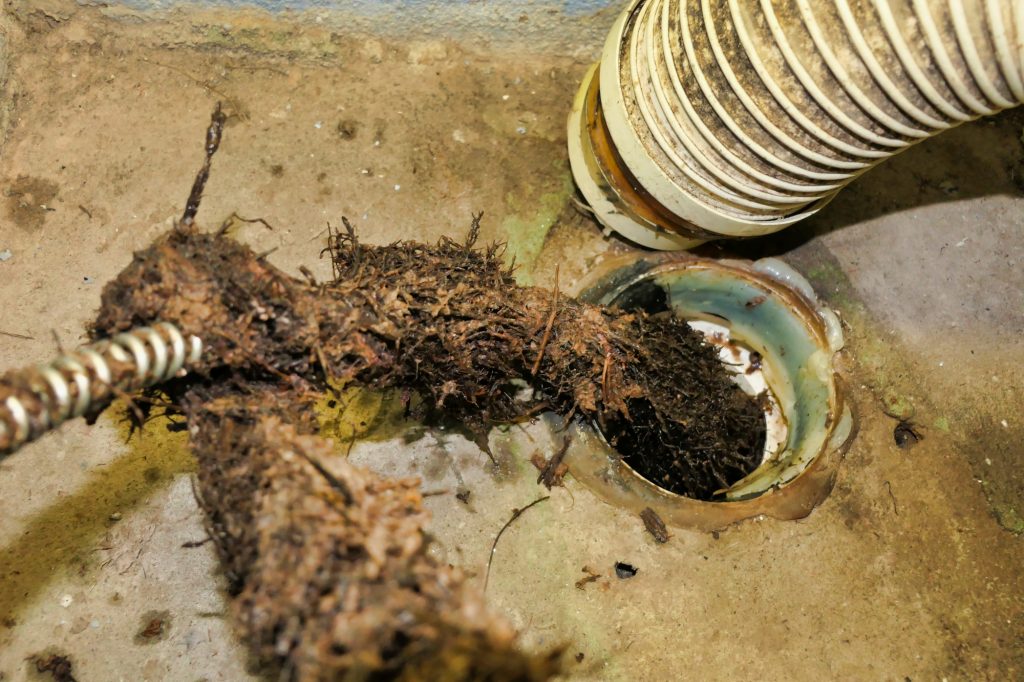
Tree roots start out as tiny, hair-fine probes that infiltrate through small cracks or joints. These grow to pose a significant threat to underground pipes with blockages and severe pipe damage.

How to Clear a Blocked Drain
There are a number of different ways to quickly and easily clear a blocked drain. Each of these remedies is designed to bust through a particular drain blockage, but it might not be effective if applied to a different blockage issue.
For example, boiling water, vinegar and bicarb is the perfect choice for removing oil, fat and food debris in kitchen drains, but might not have a lasting effect in removing hair tangled in a shower drain or decongesting a sewer line clogged with flushable wipes or tree roots. Consider what might be causing the issue to apply the best solution more effectively. If in doubt, consult a professional plumber for expert advice.
A plunger is a handy tool for many clogs. Cover any overflow openings and create a tight seal around the drain. Pump vigorously to generate suction which will dislodge obstructions.
Boiling water can be poured directly into the drain to dissolve grease and soap residue. Allow the water to cool a little from boiling point before tipping to avoid excess steam that can burn skin, as well as excessive heat that can damage pipe lining.
For a natural solution, combine bicarbonate soda and white vinegar. The resulting chemical reaction can help dissolve blockages, especially food waste and grime buildup, especially if used along with the boiling water treatment.
Lift the drain grate on showers and basins to pull out any tangled hair and debris by hand. This is a job best done regularly every few weeks to prevent build up.
Chemical cleaners are available at hardware stores and supermarkets but these need to be used sparingly. Harsh chemicals damage pipes so they become susceptible to cracking and deterioration.
For tougher blockages, a DIY drain snake can be effective. Insert it into the drain and twist it to catch hair and debris. Professional plumbers use more advanced drain snakes that have more precision, strength and length for deeper clogs.
CCTV inspection may be necessary to locate the exact position of a blockage. Professional plumbing services use cameras along with high-pressure hoses to target and remove debris. These tools are especially helpful for cases where the blockage is deep in the pipes, stormwater drains or sewage systems.
A simple and fast professional solution is hydro-jetting which employs high-pressure water to clear stubborn blockages. This method is particularly useful for removing tree roots and mineral build-up.
In some cases, the damage is too severe and pipes will need to be replaced. This can often happen with severe tree root intrusions. Professional a plumbing team will excavate the broken pipe using digging equipment and connect more effective pipes in place. This can be an expensive and disruptive solution, especially if large sections need to be excavated.
A much cheaper alternative to excavation is pipe relining. Licensed plumbers can repair damaged pipes by adhering a new lining to strengthen and seal the pipe. This is a good solution for damaged pipe lining and tree root intrusion that is not too severe.
Prevention is key. Use drain guards in bathrooms to catch hair and debris and in kitchen sinks to catch food scraps. Avoid rinsing foods down the sink including coffee grits, cooking fats and oils. Regular maintenance can help keep drains flowing freely.
Conclusion
Clearing a blocked drain doesn’t need to be daunting. With the right tools and techniques, most homeowners can resolve common blockages before things get out of hand. Simple methods like using a plunger or a homemade mixture of baking soda and vinegar often prove effective for minor clogs.
For more stubborn blockages, a drain snake or high-pressure water may be necessary. These approaches can break up and remove tougher obstructions deep within pipes.
Prevention is key to avoiding future blockages and protecting property. Installing drain guards, avoiding flushing inappropriate items, and regular maintenance can keep drains flowing freely. For persistent or severe blockages, consult a licensed plumber to prevent damage to pipes or property.
Need help? Trust the experts in blocked drain repairs in Brisbane Northside.